
Personal insights
This space isn’t about real estate strategy. It’s about people.
I’ve always written — as a child, as a teenager, and again recently, when writing resurfaced while I was building my short-term rental business in Lake Arrowhead, California.
When you buy or sell a home, you’re rarely just moving property — you’re navigating change: growth, loss, divorce, ambition, reinvention. Clients often share their stories with me during that process. This section exists because understanding people matters as much as understanding markets.
If my reflections resonate with you, we’ll likely work well together.
If they don’t, that clarity is just as valuable — and you’re free to choose differently.

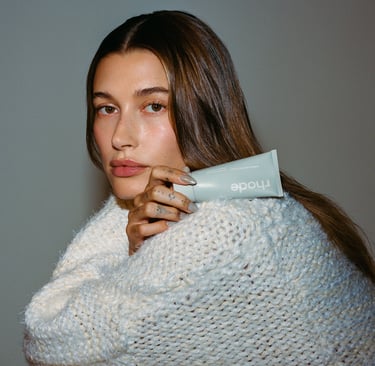
Beauty Has an Expiration Date. Equity Doesn’t.
Why Hailey Bieber Played a Smarter Game Than Most Models
I know this world personally.
I started modeling in my teenage years, continued into my early 20s, and at one point even owned my own modeling agency. I enjoyed it. It gave me confidence, discipline, and a deep understanding of branding, presentation, and how visual perception shapes opportunity.
Even now, when I do photoshoots for magazine interviews, I feel completely relaxed and in my element in front of the camera. That comfort never disappears — it becomes a skill you carry into every other arena.
But even back then, I knew something most models don’t want to admit:
You cannot rely on beauty-based income forever.
Because it is the type of income tied to youth, trends, algorithms, and public attention.
There’s no equity. No scalable asset. No protection once demand shifts.
That’s why I never saw modeling as the destination.
It was exposure. Training. A phase — not the endgame.
And this is where the difference between visibility and power becomes obvious.
⸻
Fame Is Not the Same as Financial Strategy
Look at the numbers.
Some of the most famous supermodels in the world — women with global recognition, 20+ years of runway, magazine covers, and luxury contracts — still hover around $5–20 million net worth.
Adriana Lima.
Irina Shayk.
Incredible careers. Massive visibility.
But relatively modest wealth when you consider how much money actually flows through that industry.
That tells you something important:
High income does not automatically mean smart reinvestment.
And fame does not guarantee long-term financial dominance.
Most talent-based industries are designed to pay you well, but not teach you how to compound.
You are rewarded for staying visible, booked, desirable — not for building ownership behind the scenes.
Which keeps people dependent on the next contract, the next campaign, the next moment of relevance.
Why Hailey Played a Different Game
Now compare that to Hailey Bieber.
She didn’t just attach her name to random products and collect influencer checks.
She built a real company — Rhode — with a completely different mindset.
She was involved in:
• product formulation
• lab development and testing
• packaging and brand design
• positioning and visual identity
• and she remained the face and model of the brand
She didn’t just promote it.
She built it.
And she built it in a way that was:
• clean
• modern
• highly Instagrammable
• and perfectly aligned with how her audience actually lives and shops
She wasn’t just monetizing attention.
She was converting it into infrastructure.
Three years later, she sold the company to e.l.f. for around $1 billion.
That’s not influencer money.
That’s not endorsement money.
That’s ownership money.
That’s understanding that fame is only powerful if you convert it into equity.


From August to Cruel summer
Why some women evolve while others remain "August" forever
I used to write a lot as a child—poems, fantasies, imagined lives, inner monologues for characters in books and films. As a teenager, I started dismantling stories, songs, book and movies characters piece by piece . Some songs were never just songs to me; they were blueprints. Emotional architecture. I pulled them apart line by line, searching for motive, deeper meaning and truth.
Then life got busy at some point. Ambition took over. Noise replaced stillness. Writing went quiet for years—not lost, just dormant.
This summer, in the California mountains of Lake Arrowhead, it came back. Maybe it was the absence of distraction. Maybe it was the clarity that comes when you’re finally building something of your own—my short-term rental business and my long-term vision. Or maybe it returned because I was preparing for the interviews and was pulled back into memories I hadn't touched since childhood and my teenage years. Writing resurfaced not as a potential future career (I already have too many ideas/projects and things that require my attention going on) but as a hobby. A way of observing the world—and myself—again.
That’s how I found myself circling back to two Taylor Swift songs I’ve lived inside for years: August and Cruel Summer.
I always knew those two songs were interconnected. They explore the tension of a secret, forbidden summer romance yet each carries a different energy and frequency.
When I looked closely, I realized they were telling a story of the same girl — but at different stages of her becoming.
August is softness. Longing. The ache of possibility without power. She hopes more than she decides. She waits. She dreams someone or something will save her. Some August girls stay there forever—suspended in almosts—rushing into predefined roles or even motherhood to feel anchored, hiding inside safety or behind someone's back because figuring out who they are feels too dangerous.
I was that August girl in my early twenties. I wasn't weak but I was definitely softer, sweeter. More hopeful. There is tenderness in that phase—but also danger. When longing replaces authorship, life happens to you instead of through you.
Cruel Summer is what comes after the burn and pain.
Taylor Swift once said she wrote Cruel Summer during one of the darkest emotional periods of her life. What matters isn’t the darkness—it’s the decision she made inside it. Instead of writing a sad song, she chose intensity. Compression. Voltage. The song doesn’t mourn pain; it weaponizes honesty.
“I’m drunk on the back of the car and I cry like a baby coming home from the bar…” — is not recklessness, but life lived.
“If I bleed, you’ll be the last to know.” — she understands the cost now. She won’t lose herself. And she won’t perform her pain.
Cruel Summer might seem chaotic or even reckless on the surface but when you look closely you realize that it isn’t chaos. It’s consciousness under pressure. The girl knows the risk. She’s been burned before. She understands secrecy, desire, consequence—and she still chooses to step forward. Not because she’s naïve and hopeful, but because she’s sovereign and she won't lose herself this time.
Some women remain Augusts forever, some deliberately chose to grow while others are forced to evolve—by loss, heartbreak, ambition, or life’s uncompromising lessons. Many of the softer August women—especially those who were hurt, who became single mothers, who gave before they knew how to choose—gravitate toward me. They come for advice, for perspective, for navigation. Maybe because they sense I’ve been there. And I came back.
Cruel Summer women don’t disappear. Some become mothers too—but it’s never the entirety of who they are. They keep building. Creating. Wanting. They refuse to collapse themselves into one single dimension. Because when identity narrows to one role and growth is deferred, the woman underneath can quietly dissolve.
Taylor’s music resonates with me so deeply because we share a similar archetype—one that’s rarely named. Tall (both 5'11), blond, visibly feminine and highly intelligent. We are deep thinkers in bodies that many men try to objectify, sexualize or judge before we even speak. We are often measured by appearance before intelligence.
I love both songs. But Cruel Summer is who I am now. I can step into risk and intensity without losing myself. I no longer bleed or wait to be saved. I write my own story.
August teaches you how it feels to want.
Cruel Summer teaches you how it feels to choose—fully aware of the cost, and willing to pay it without getting burnt or losing yourself.
That’s the difference.
And once you cross that bridge, there’s no going back.
Get in touch
Address
Key Realty Southwest
9890 S Maryland Pkwy #200A, Las Vegas, NV 89183
Contacts
(442)615-0955
margarita@vegasnumberonerealtor.com
mskmargarita81@gmail.com
License - S.0198921